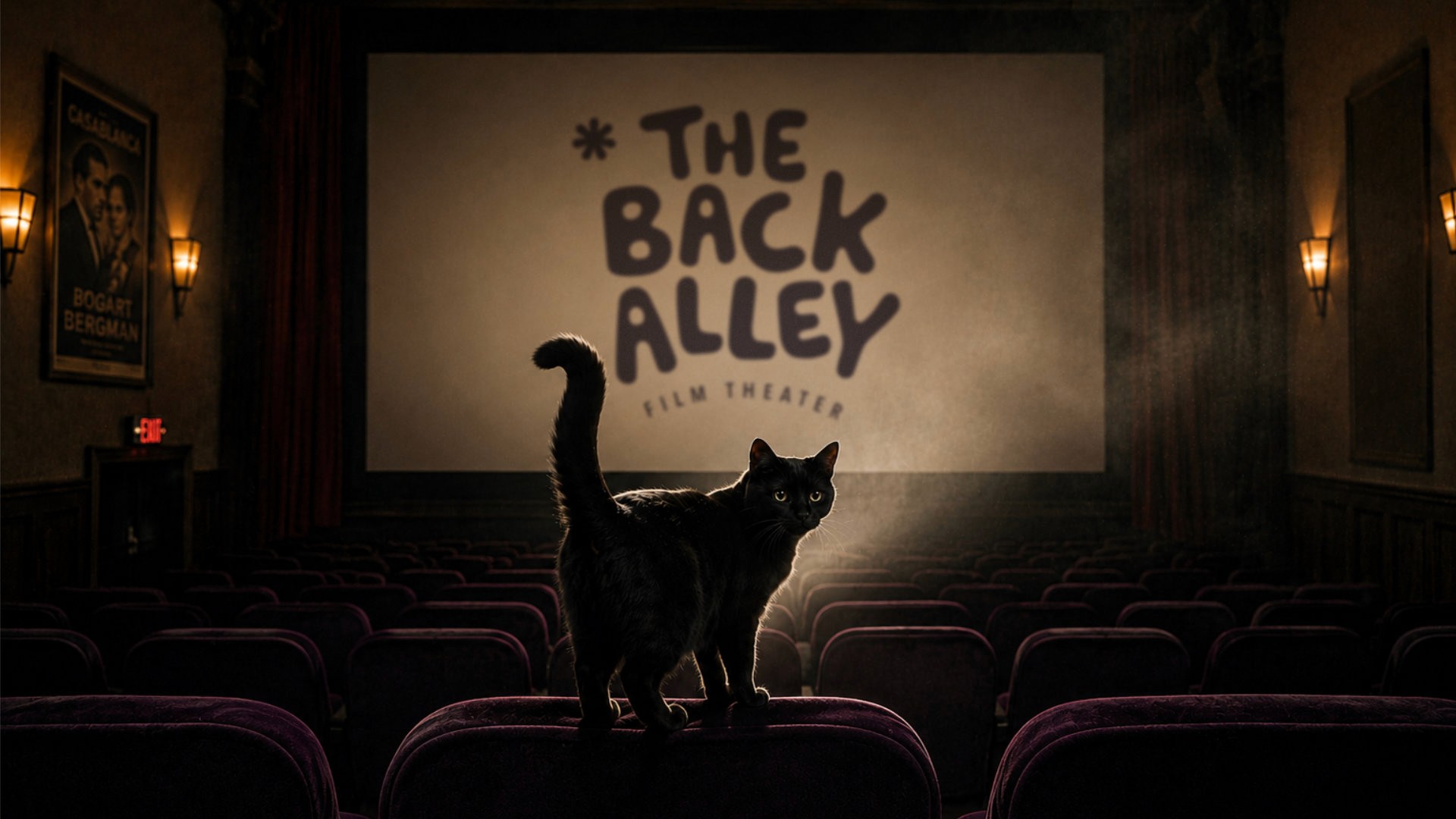
The Back Alley
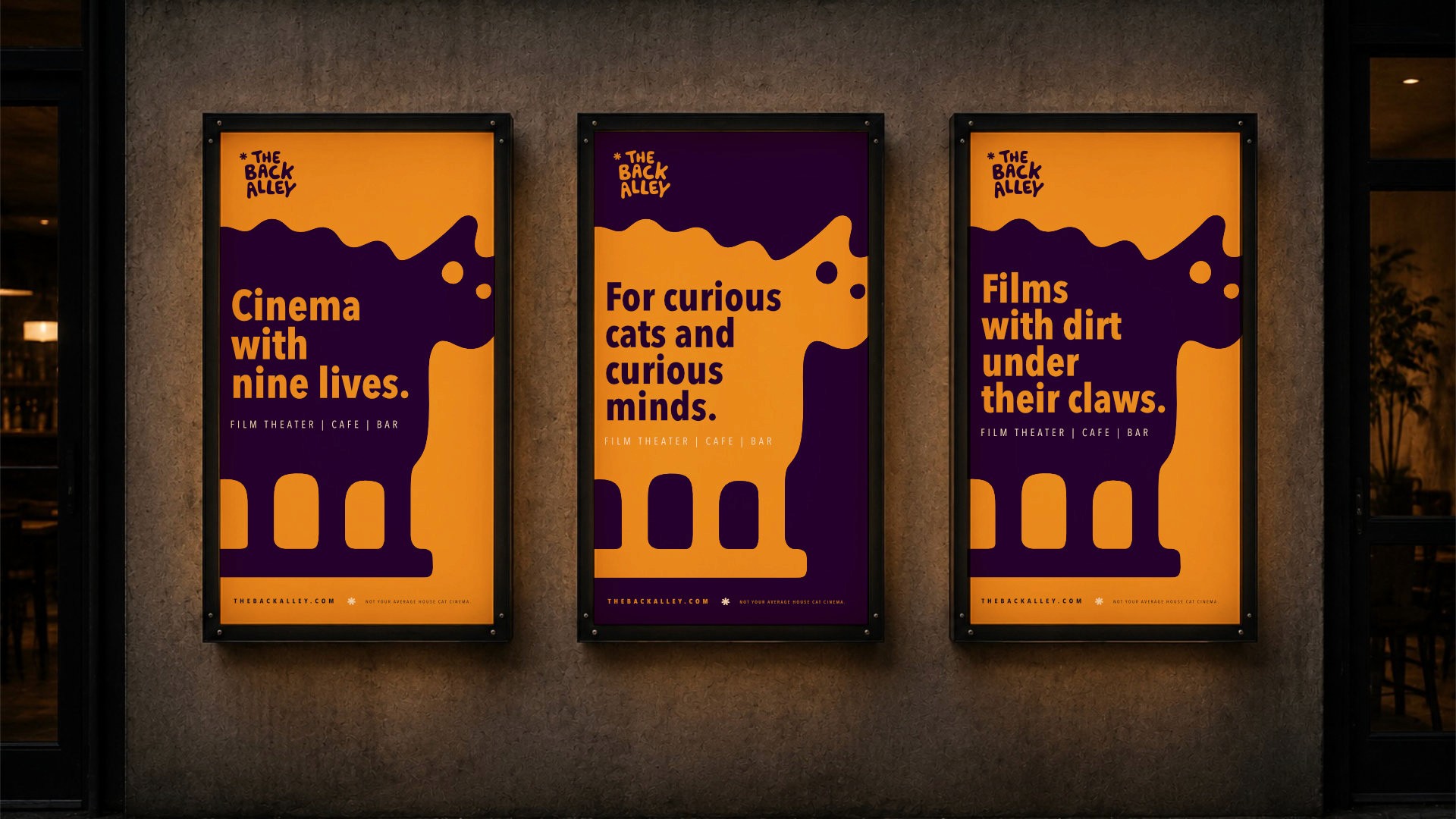
Films with dirt under their claws.
I’ve always liked films. Big productions, small productions, old movies, weird movies. But the ones that usually stay with me are independent films. The kind that feel a bit rough around the edges. Sometimes made with limited resources, but still able to hit you harder than something with a hundred million dollar budget.
Living in the Netherlands, I noticed there are actually a lot of independent theaters and small cinemas, which is great. But many of them feel visually boring. Either the identity disappears completely, or it becomes overly artsy in a way that feels cold and inaccessible. I wanted to explore something different. A cinema identity that feels independent without becoming pretentious about it.
That became the starting point for The Back Alley Film Theater, a concept identity for an independent cinema space dedicated to underground, experimental, and low budget filmmaking. The space is imagined as a cultural hiding place somewhere between a cinema, a late-night café, and a neighborhood bar. A place where people can watch films, grab a drink, stay after the screening, or simply talk about movies. Somewhere for filmmakers showing projects held together by tape, passion, and borrowed equipment. Films with personality, flaws, texture, and risk.
A cat watching from the dark
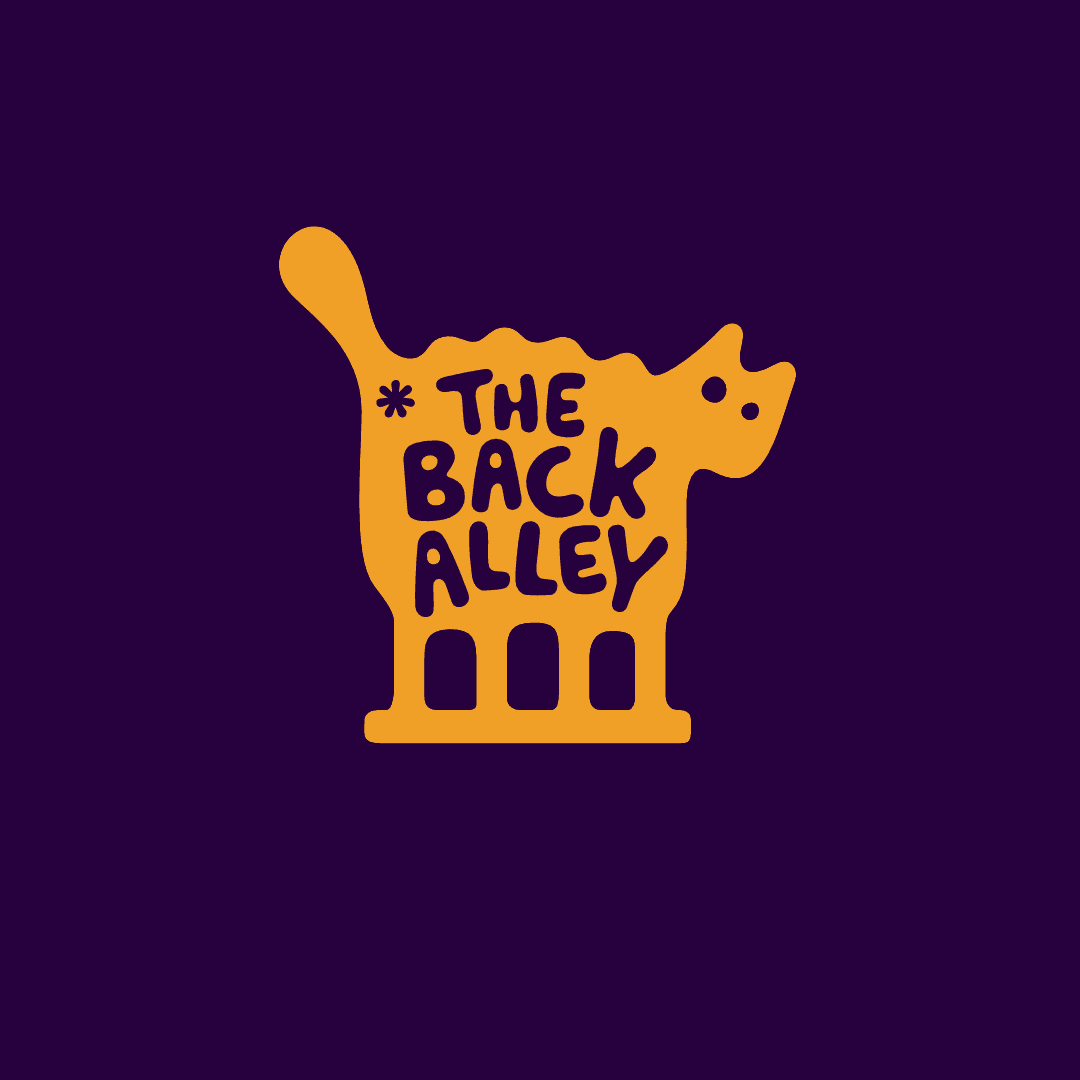
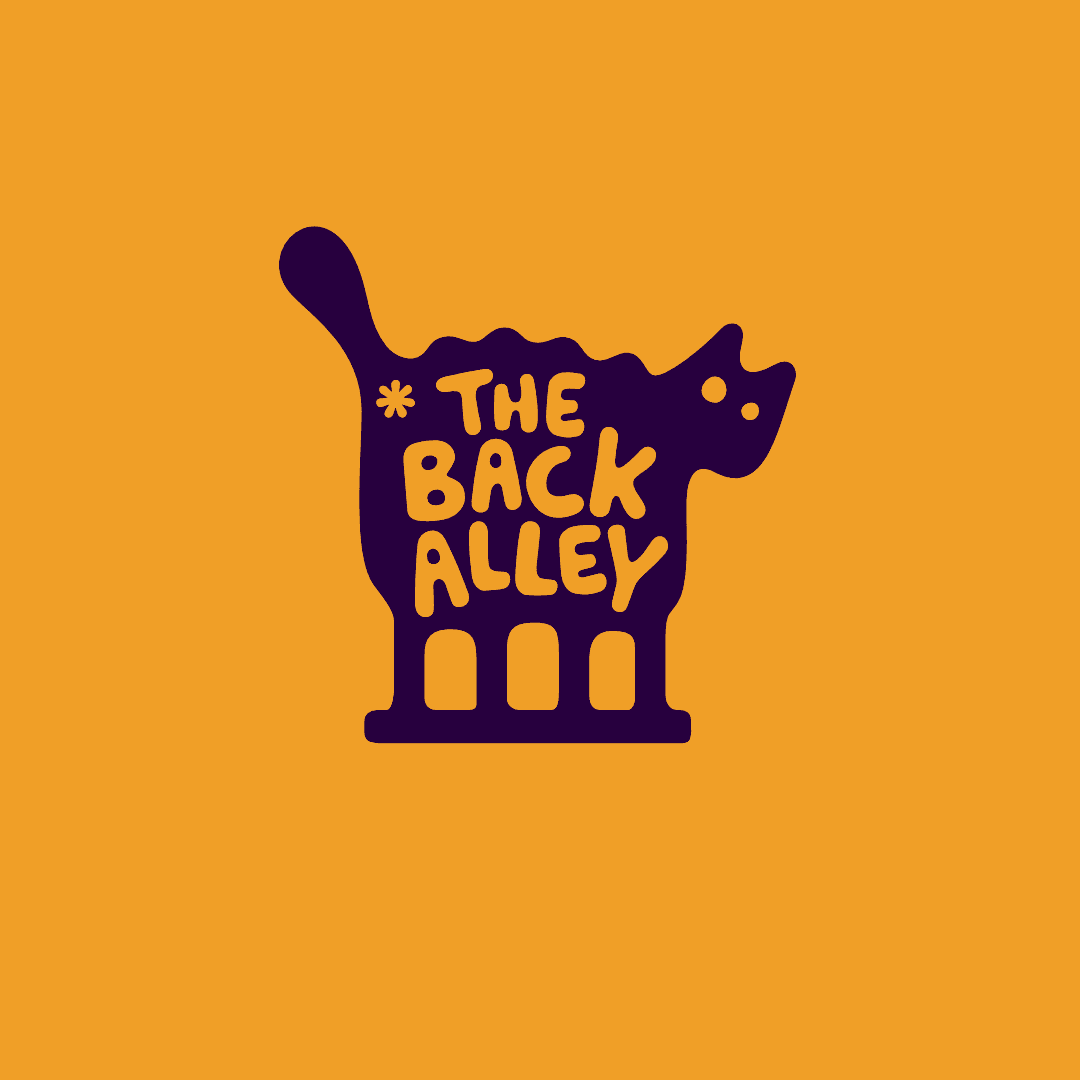
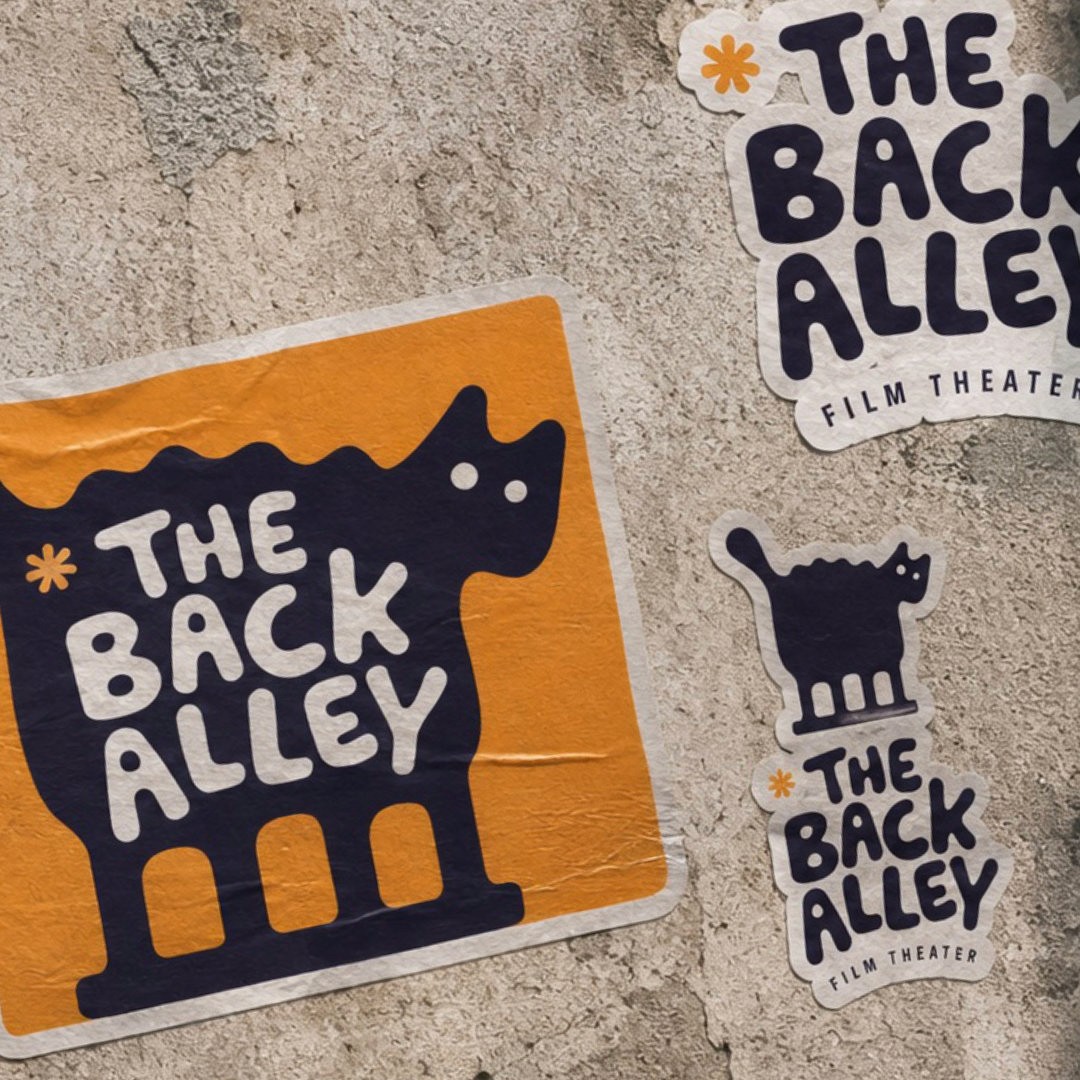
At the center of the identity is a cat symbol whose legs subtly form the perforated strip of a 35mm film reel. The cat felt right almost immediately. Independent cinema already carries a personality that feels similar — curious, observant, difficult to control, active at night. The same way stray cats move through cities unnoticed, this theater exists slightly outside the mainstream. The mark needed to feel simple enough to work like an old venue stamp, a sticker on a bathroom wall, or something spray painted on the side of a building. Recognizable without becoming overly polished or illustrative. More icon than mascot.
Playful, but not childish. Funny in a subtle way. Slightly weird. Definitely imperfect. No shiny typography, glowing stars, or classic cinema clichés. The goal was something that feels less like a traditional theater and more like a place you genuinely want to spend time in. Somewhere approachable, that invites people in without trying too hard to look exclusive or underground.

Building the atmosphere
The mark
The cat and the cinema building are resolved into a single shape rather than placed next to each other. The legs of the cat form the frames of a 35mm film strip — a double reading that rewards a second look without announcing itself. The mark needs to work as a sticker, a stamp, a patch on a bag. That meant keeping it as one flat silhouette with no gradient, no fine detail, nothing that breaks down at small sizes or in low-fidelity reproduction.
The lettering
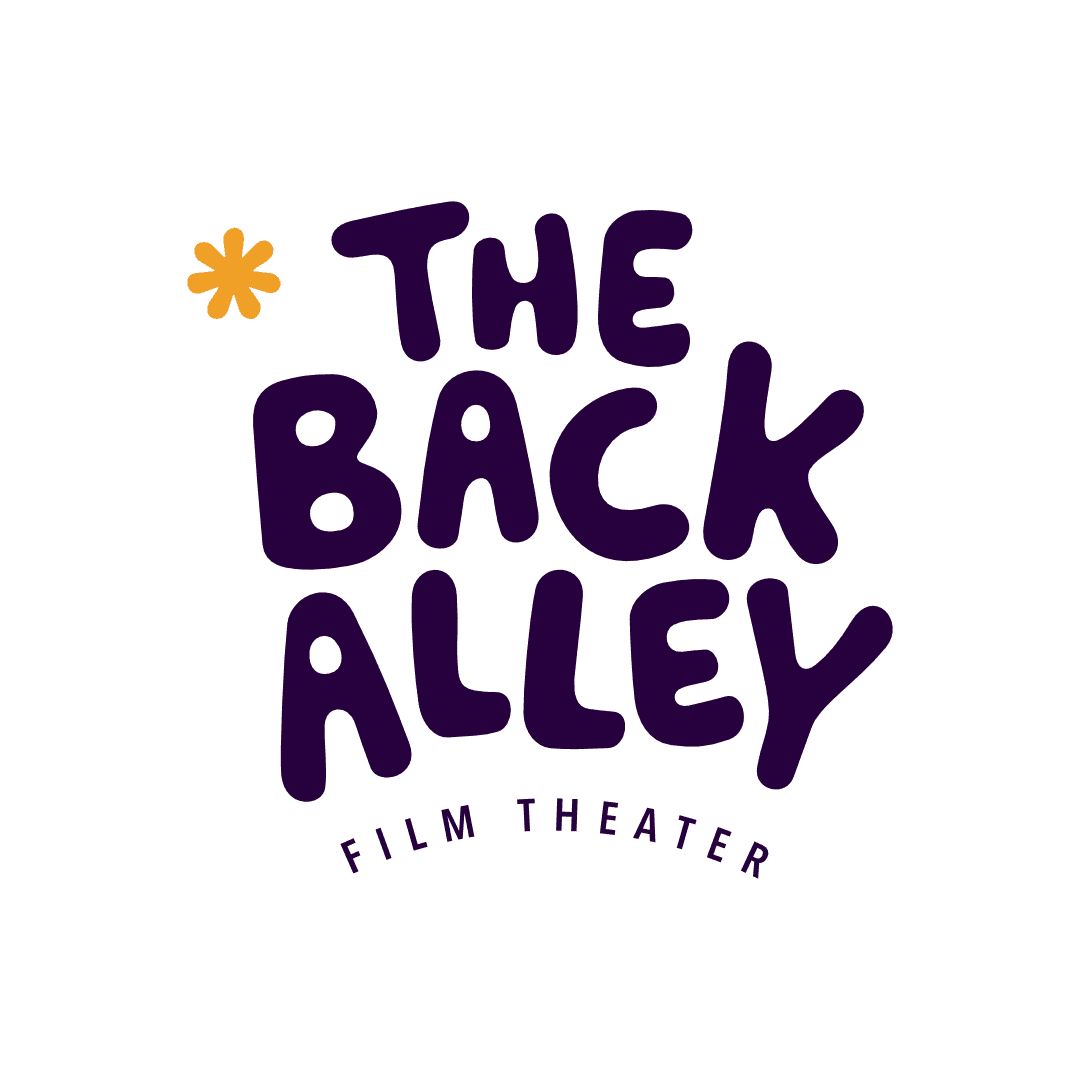
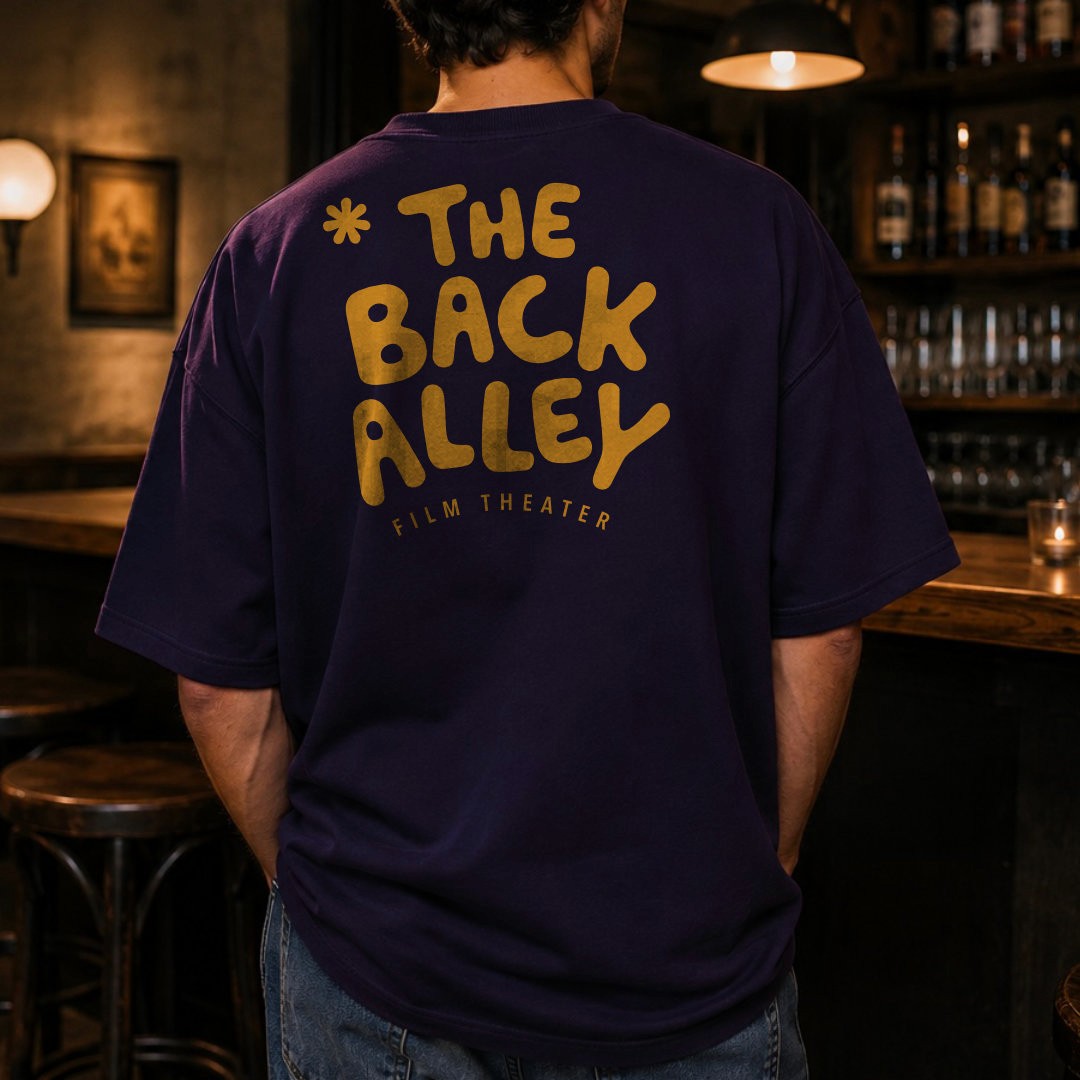
The wordmark uses a rounded, hand-drawn style that sits somewhere between informal and crafted. It avoids the two obvious traps: the stiff formality of classic cinema typography, and the over-designed quirkiness of brands that try too hard to signal personality. The slightly uneven quality of the letters is part of the point — it suggests something made by hand, without making a performance of it. It belongs on a wall as much as on a screen.
The colour palette
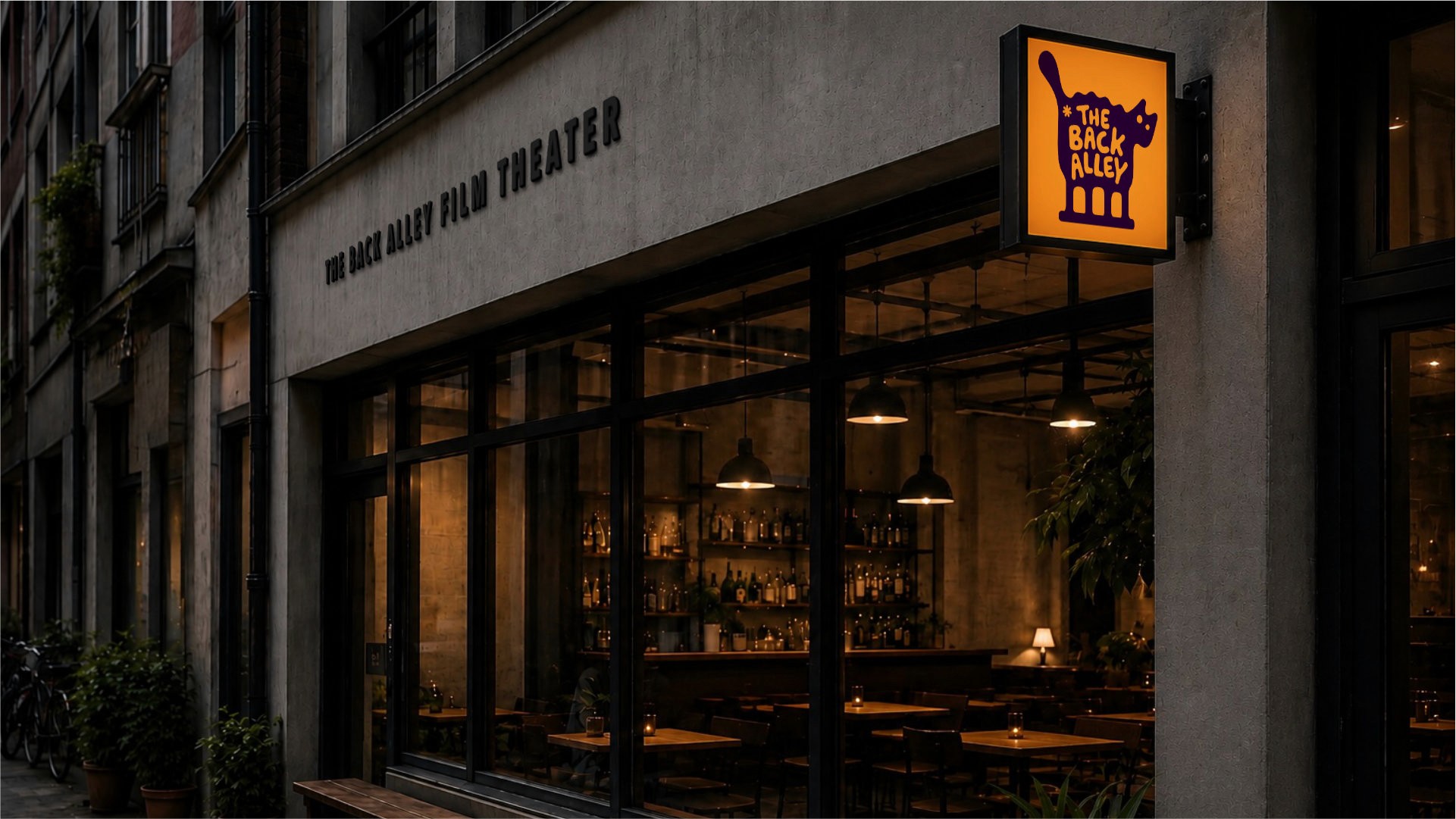
The identity runs on two colours only: a deep purple and a warm, almost burnt amber. That constraint was intentional. Two-colour systems force clarity and create instant recognisability. The visual economy of old venue stamps or screen-printed posters made on a tight budget.
The palette also does something specific to the mood. Purple carries a nocturnal weight without tipping into black, which would have felt too slick and cinematic in the wrong way. The amber brings warmth — candlelight, a late-night bar, the glow of a projector beam. Together they feel just right.
The two colours swap roles across applications. Sometimes purple is the ground and amber cuts through it; sometimes it flips. That inversion keeps the system flexible and alive across posters, signage, and digital without needing to introduce new colours or neutrals.